 images/bannerimages/Blog-Banner.jpg
From Gut Feel to Real-Time Signals
Merchants once relied on instinct and last season’s numbers to plan for the future. Historical analysis included last year’s sales, a judgment about incoming trends, and a small cushion for unexpected changes. By the time planning wrapped up, the market had often shifted. Merchandise based on yesterday’s demand frequently missed the mark. Now, shoppers’ expectations and behaviors shift quickly, and lagging data results in missed margins, excess inventory, or empty shelves.
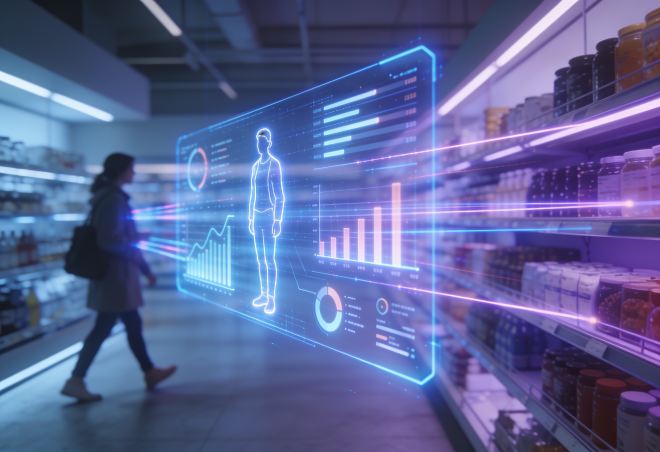
AI introduces a dramatic change by offering real-time analytics. Unlike traditional models, AI can process countless signals simultaneously. It factors in customer browsing patterns, recent searches, social media chatter, competitor moves, and even the local weather. These data points combine to generate forecasts that are relevant for today's shoppers, not just a repeat of last year’s pattern. Retailers use insights from these predictive models to guide not only product assortment but campaign timing, discounts, and marketing channel strategy. When decisions align closely with current demand, results improve for everyone involved.
The Inventory Challenge: More Than a Warehouse Issue
Retail marketers often view inventory management as an operational concern, managed by warehouses and buying teams. Yet it connects directly to marketing outcomes. When customers, enticed by an AD, click to buy only to find their size or color unavailable, the brand experience sours. At that point, both the marketing budget and the shopper’s trust are lost. Modern retailers recognize that inventory levels tie back to every marketing decision, from featured promotions to influencer partnerships.
AI-powered inventory management closes that loop. StyleMatrix is built specifically for fashion and footwear retailers, using AI to forecast demand at the individual SKU level across every size, color and store location. That means retail marketing decisions can be made around what is actually available and what is predicted to sell, rather than what was ordered months ago and may or may not still be sitting in a warehouse. This level of detail helps brands avoid missed sales from stockouts and prevent costly markdowns on overstocked items. The result is not only higher profit margins but also a smoother customer experience every time somebody shops online or walks into a store.How AI Makes Personalization Possible
Personalization stands out as one of the most significant ways AI is changing retail. In the past, only huge companies with extensive IT budgets could offer truly personalized experiences. Today’s AI technology lets retailers of all sizes automatically recommend products, tailor prices, and adjust content for each customer. AI engines analyze past purchases, site visits, wish lists, and even the timing of each purchase to deliver the most relevant offer at the optimal moment.
For example, a customer who searched for sneakers last month, bought athletic socks last week, and opens emails late at night will receive recommendations that reflect those behaviors. Someone new to the brand may see simpler, introductory messages. Meanwhile, loyal shoppers receive exclusive offers or early-bird notifications for new drops. Such tailored engagement once marked a brand as elite; now it is fast becoming the standard. Expectations have shifted, and brands unable to keep up risk losing touch with their customers.
Predictive Intelligence Shaping the Customer Journey
AI does not stop at simply improving inventory or making product suggestions. It has become a core tool to support customers throughout their journey with a brand. Sophisticated models track key signals indicating when a customer might be at risk of leaving or when a prospect is ready to buy. AI identifies patterns from browsing history, cart abandonment, help desk interactions, and social media comments to pinpoint where intervention can make a difference.
Brands can reach out with a timely discount or product reminder if AI predicts a likely cart dropout. Similarly, loyalty programs use AI insights to decide when to upgrade a frequent buyer’s membership. Such strategies move retail marketing from broad, untargeted campaigns to highly precise actions. Segments receive messages that are relevant to them, making communications feel natural rather than intrusive. These refinements stem directly from the ability to predict customer behavior with increasing certainty.
The Value of Learning Over Time
As with many advanced systems, the full power of AI in retail emerges over time. Early adoption involves building datasets and setting up models, but as the system ingests more information, its predictions become sharper. Retailers can spot emerging patterns quickly, adjust campaign budgets, and alter inventory plans for an upcoming season. A platform learning from two years of sales, returns, and customer feedback will outperform a newly launched one. The learning curve creates a widening gap in forecasting and marketing precision.
What sets AI apart is not just its immediate benefits; it is the compounding value earned as more data becomes available. Margins improve, and shoppers see highly relevant messages and products. Brands that invest in AI-driven insights today are laying the foundation for years of improved decision-making. Meanwhile, those who postpone adoption may find it difficult to catch up to companies whose decision-making grows more accurate each month. The payoff lies in consistent, efficient, and sustainable performance improvements at every touchpoint.
Future Directions in Predictive Retail
AI will continue to reshape the retail industry across many dimensions. Innovations on the horizon include even deeper integration with voice assistants, augmented reality fitting rooms, and real-time price optimization. The strength of current predictive models comes from their ability to use diverse signals to forecast needs with a high degree of accuracy. As technology matures, expect shopping to grow even more predictive, convenient, and personalized. Retailers gain by focusing on customer experience, operational efficiency, and a data-driven culture throughout their organizations.