 images/bannerimages/Blog-Banner.jpg
Alo did not simply rise because it made flattering leggings. It rose because it read the cultural room.
The modern consumer was no longer dressing for the gym. She was dressing for the airport, the school run, the coffee meeting, the content shoot, the wellness retreat, the Erewhon smoothie run, the “I am working on myself” era. Alo became the uniform for that life.
And in doing so, it moved from yoga brand to fashion brand, from fashion brand to wellness ecosystem, and from wellness ecosystem to a full-blown cultural signal.
That is the genius of Alo.
It did not sell activewear. It sold a state of being.
The Brand Story: Air, Land, Ocean
Alo was founded in Los Angeles in 2007 by Danny Harris and Marco DeGeorge. The name stands for Air, Land, Ocean, a reference to the founders’ belief that yoga, movement, and environmental awareness are connected. Alo’s early mission was simple but expansive: bring yoga to the world. Its brand language has long centred on “mindful movement,” a phrase that gave the company room to stretch far beyond apparel.
That matters because the best modern brands are not built around products. They are built around permission.
Nike has permission to speak about human potential. Apple has permission to speak about creativity. Patagonia has permission to speak about environmental responsibility. Alo earned permission to speak about wellness.
At first, that meant yoga clothing. Then it meant community classes. Then digital workouts. Then luxury outerwear, wellness clubs, Roblox sanctuaries, Fashion Week activations, celebrity campaigns, international flagships, and the idea that a handbag could be part of a wellness lifestyle.
That arc may sound ambitious. But it is also very consistent.
Alo’s centre of gravity has always been less “what you wear to do yoga” and more “how you live when wellness becomes part of your identity.”
Why Alo Hit at Exactly the Right Cultural Moment
Alo’s rise cannot be separated from the wider shift in culture.
Wellness has become status. Not in the old conspicuous-consumption way, where luxury was announced through logos, hard-to-get handbags, and champagne-soaked aspiration. The new status is quieter but no less coded: toned bodies, good sleep, green juice, Pilates memberships, matcha, meditation apps, clean interiors, supplements, infrared saunas, and the ability to look effortlessly composed at 8 a.m.
Alo found itself sitting at the intersection of several powerful trends:
Athleisure became everyday fashion. Leggings left the studio and entered restaurants, airports, offices, and luxury retail floors.
Wellness became identity. Consumers began buying products that made them feel aligned with the person they wanted to become.
Influence moved from editorial to social proof. A celebrity photographed in Alo on a morning walk could do what a glossy magazine spread once did.
Luxury became experiential. Younger consumers increasingly expect brands to create a world, not just a wardrobe.
Alo understood that a brand could become a lifestyle if it controlled the aesthetic, the rituals, the community, and the cultural moments around the product.
This is why Alo feels less like a traditional activewear label and more like a wellness media company with a highly profitable apparel engine.
The Brand: Minimal, Aspirational, and Highly Wearable
Alo’s aesthetic is deceptively simple.
Neutral palettes. Sculptural silhouettes. Cropped layers. Matching sets. Clean lines. Studio-to-street styling. The brand has mastered a kind of polished effortlessness that photographs beautifully on Instagram, TikTok, paparazzi shots, and everyday customers alike.
It is not intimidatingly technical. It is not aggressively sporty. It is not overly spiritual. Alo sits in the sweet spot between discipline and softness, body confidence and ease, celebrity polish and everyday wearability.
This is a difficult balance to strike.
Lululemon built much of its authority around performance and community. Nike owns athletic mythology. Adidas owns sport and street culture. Gymshark owns fitness creator culture. Alo’s territory is different. It owns the idea of wellness as luxury lifestyle.
The brand’s visual world is calm but expensive. Its products are designed to move, but they are also designed to be seen. A matching Alo set is not merely functional. It signals that the wearer is part of the wellness economy: intentional, mobile, aspirational, and socially fluent.
That is brand strategy at its sharpest. Alo made the product useful, but it made the meaning bigger.
The Marketing Strategy: Social Proof Before Paid Persuasion
Alo’s marketing engine is built on one of the oldest rules in fashion: people want what desirable people are already wearing.
But Alo modernised that rule for the social era.
Rather than relying only on polished campaign imagery, the brand benefited enormously from paparazzi-style visibility and influencer-native content. Kendall Jenner, Kylie Jenner, Hailey Bieber, Gigi Hadid, Rosie Huntington-Whiteley, Jisoo, and other high-profile figures have all been connected with the brand’s image, either through campaigns, styling, or public visibility. Alo has leaned into this by creating shoppable “as seen on” edits and celebrity-led campaigns.
This is not accidental celebrity dressing. It is strategic cultural placement.
Alo understood that the most persuasive activewear ad is not always an ad. It is a photo of someone aspirational leaving Pilates. It is a TikTok haul. It is a mirror selfie. It is a model in off-duty mode. It is the subtle suggestion that this is what women with access, discipline, and taste wear between the gym and the rest of their lives.
The magic is that Alo sells aspiration without making it feel too distant. A Chanel jacket may be fantasy. A matching Alo set feels attainable enough to justify.
That is where the brand has been particularly clever. It borrows codes from luxury — scarcity, styling, celebrity, premium pricing, pristine retail, elevated campaigns — but keeps the product close enough to everyday use that the customer can rationalise the purchase.
It is not just “I want to look like her.”
It is “I could actually wear that tomorrow.”
The Brand Strategy: From Product Company to Ecosystem
The most important thing Alo has done is expand the frame.
Many activewear companies sell into moments: gym, yoga, running, recovery, travel. Alo sells into a lifestyle loop.
You wake up and do an Alo Wellness Club class. You wear Alo to Pilates. You go to coffee in Alo. You travel in Alo. You attend an Alo event. You shop at an Alo “sanctuary.” You see Alo on celebrities. You encounter Alo in Roblox. You follow Alo creators. You see the brand at Fashion Week. You absorb the message repeatedly: Alo is not an outfit. Alo is a way of living.
This is ecosystem thinking.
Alo’s acquisition of Cody in 2017, later rebranded as Alo Moves and now Alo Wellness Club, was a crucial move because it gave the brand a content platform, not just a commerce channel. The app offers yoga, fitness, mindfulness, and wellness programming, and Alo has since positioned it as a broader at-home studio experience.
That means Alo can meet customers before and after the purchase.
Most apparel brands have a transactional relationship: see product, buy product, wear product. Alo created a ritual relationship: move with us, learn with us, breathe with us, dress with us, belong with us.
This is why Alo’s wellness expansion is not a side quest. It is the moat.
Collaborations and Ambassadors: Borrowing Cultural Heat, Then Owning It
Alo has been highly disciplined in the people it chooses to associate with. Its celebrity strategy is not random fame-chasing. It is built around people who already embody the brand’s desired codes: beauty, discipline, global relevance, health, fashion, and social reach.
Kendall Jenner has been one of the brand’s most visible collaborators. In 2025, Alo launched its “Luxury Is Wellness” campaign with Jenner, reinforcing the brand’s central thesis that modern luxury is less about excess and more about self-care, movement, and intentional living.
Jisoo of BLACKPINK fronted Alo’s Spring 2024 collection, giving the brand powerful reach into K-pop, beauty, fashion, and global youth culture. Teen Vogue reported that Jisoo’s campaign highlighted Alo staples including shorts, tanks, sweatpants, and pullovers, while positioning the partnership around health and wellness.
BTS’s Jin was also announced as a global ambassador, aligning Alo with one of the most influential fandom ecosystems in the world and supporting the brand’s planned South Korean expansion.
These partnerships do more than drive awareness. They globalise the brand’s emotional codes.
Alo is no longer just Los Angeles wellness. Through these ambassadors, it becomes Seoul, Paris, London, Sydney, New York, Aspen, and everywhere the global wellness consumer is looking for a uniform.
Fashion Week, Aspen, and the Luxury Pivot
One of Alo’s smartest moves was recognising that the activewear category had a ceiling if it stayed too close to “gym clothes.”
So Alo moved into fashion.
Its New York Fashion Week activity helped reposition the brand in a more elevated context. Alo served as the official wellness partner of NYFW: The Shows, hosting wellness activations and events that blended fashion, community, and mindfulness.
In 2022, Alo debuted its Aspen Collection at NYFW, a move that pushed the brand into ready-to-wear and winter performance luxury. The collection included ski-inspired pieces, cashmere sets, faux fur jackets, and water-resistant outerwear, with pricing reportedly ranging from $54 to $1,425.
That moment was important because it stretched consumer perception.
Alo was no longer only for the mat. It was for après-ski. It was for travel. It was for the luxury wellness weekend. It was for the woman whose workout wardrobe, airport wardrobe, and holiday wardrobe were beginning to merge.
The Aspen Collection also showed how Alo thinks about product expansion: not by abandoning wellness, but by following the wellness consumer into adjacent rituals.
Where does she go after Pilates? Where does she travel? What does she wear on the plane? What does she wear in Aspen? What does she wear while performing a life of health, calm, and affluence?
Alo’s answer: ideally, Alo.
Experiential Marketing: The Store as Sanctuary
Alo’s retail strategy is one of the clearest signs that the brand understands modern consumer psychology.
It does not frame stores merely as stores. It frames them as “sanctuaries.”
That language matters. A store sells to you. A sanctuary receives you. A store asks for a transaction. A sanctuary promises a feeling.
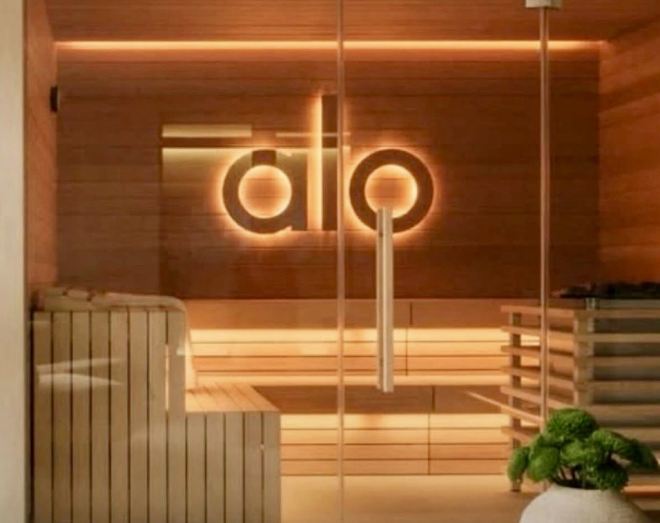
Alo’s physical spaces tend to use calming design codes: neutral tones, natural textures, open layouts, greenery, and a wellness-forward atmosphere. Its recent Sydney opening in Chatswood, for example, drew large queues and included acro-yoga performances, wellness drinks, giveaways, influencer activity, run clubs, and wellness walks. The brand also reportedly plans to open four Australian “sanctuary” locations by the end of 2026.
That is experiential marketing doing exactly what it should do. It turns the opening of a shop into a community moment. It creates content. It rewards belonging. It allows customers to feel like they are entering the brand universe, not just browsing racks.
Alo’s UK expansion has followed similar logic, with new stores described as hubs for connection and mindfulness rather than simple retail footprints.
This is the future of retail for premium lifestyle brands.
The store must be a stage, a studio, a content backdrop, a community centre, and a conversion channel. Alo understands that a customer who attends a wellness walk, posts from the store, buys a set, and follows the brand online is worth more than a one-time shopper.
She is not just a customer.
She is distribution.
The Digital Wellness Play: Alo Moves to Alo Wellness Club
Alo’s foray into wellness is more than brand theatre. It has invested in actual wellness infrastructure.
Alo Moves, now Alo Wellness Club, extends the brand into yoga, Pilates, meditation, fitness, and mindfulness content. According to Alo’s own Wellness Club site, the app now gives users access to hundreds of programs and thousands of classes.
This move is strategically powerful for several reasons.
First, it deepens loyalty. A customer who practices with Alo instructors is emotionally closer to the brand than someone who only owns leggings.
Second, it creates daily or weekly touchpoints. Apparel purchases are occasional. Wellness routines are recurring.
Third, it gives Alo credibility. The brand can say it is about mindful movement because it actually helps people move.
Fourth, it creates a content flywheel. Instructors, classes, challenges, and programs give Alo endless material for social, email, retail events, and community campaigns.
This is where many brands misunderstand wellness. They treat it as a campaign theme. Alo treats it as a platform.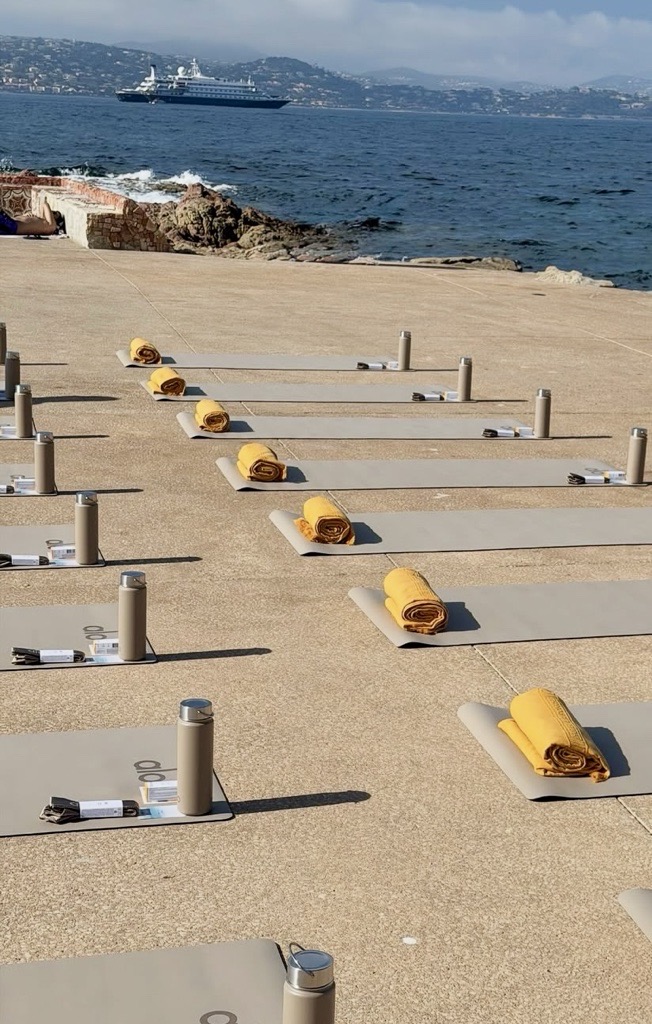
Roblox, Web3, and the Metaverse Experiment
Alo has also been willing to test emerging channels before they become mainstream brand playbooks.
In 2022, it launched Alo Sanctuary on Roblox, an immersive wellness experience that offered meditation, yoga-inspired activities, digital fashion, and mindful movement quests. Roblox stated that Alo would donate to mental health initiatives through Alo Gives for every user who completed mindful movement quests.
Some marketers may look at that and see a gimmick. But that misses the bigger picture.
Alo was not just chasing the metaverse buzzword. It was translating its brand world into a new behavioural environment. Young consumers were already spending time in digital spaces. Alo asked: what would wellness look like there?
The answer was not “buy leggings.” It was “enter a sanctuary, move, meditate, dress your avatar, participate.”
That is smart brand translation.
Alo has also experimented with digital assets and immersive retail concepts around Fashion Week and product launches, including NFT-linked initiatives connected to its Aspen Collection.
Not every experiment needs to become the future of the company. The strategic value is that Alo behaves like a brand comfortable with cultural edges. It tests. It learns. It shows up where attention is shifting.
That alone matters.
Alo Gives: Purpose Without Overcomplication
Alo’s purpose strategy lives through Alo Gives, the brand’s nonprofit arm focused on bringing yoga and mindfulness to children. Alo describes the mission as changing the world through yoga, with initiatives designed to introduce mindfulness and movement to young people.
The strength of Alo Gives is its coherence.
It does not feel bolted on. It is not a random cause unrelated to the business. It ladders directly back to the brand mission: bring yoga to the world.
This is where purpose works best. Not when a company chooses the loudest issue of the moment, but when it builds a credible bridge between what it sells, what it believes, and what it can genuinely contribute.
For Alo, giving children access to yoga and mindfulness is both philanthropic and strategically aligned. It reinforces the brand’s reason for being without requiring a complicated explanation.
The Luxury Question: Can Wellness Be Premium?
Alo’s more recent moves show a brand pushing hard into luxury territory.
Its “Luxury Is Wellness” platform with Kendall Jenner made the thesis explicit. Alo is not simply participating in wellness culture; it is trying to define wellness as the new luxury.
That is an important distinction.
Traditional luxury has often been about rarity, craftsmanship, heritage, and price. Alo is playing with a newer luxury language: vitality, time, calm, self-investment, beautiful routines, and access to spaces that make you feel better.
This is why Alo can sell leggings, cashmere, outerwear, wellness classes, and high-end accessories under one umbrella. The unifying idea is not product category. It is lifestyle aspiration.
The risk, of course, is overextension.
When a brand says everything is wellness, the word can start to lose meaning. A $130 legging can be wellness. A meditation class can be wellness. A beautifully designed store can be wellness. But when luxury handbags or broader fashion categories enter the picture, Alo has to keep proving that its expansion is rooted in the customer’s life, not just the company’s appetite for margin.
So far, Alo has managed this by maintaining a consistent aesthetic and emotional world. But the bigger the brand becomes, the harder that discipline gets.
What Entrepreneurs and Marketers Can Learn from Alo
Alo’s rise offers a modern brand-building playbook.
The first lesson: own a feeling, not a category. Categories get crowded. Feelings create loyalty. Alo does not merely own yoga apparel; it owns the feeling of polished wellness.
The second: build rituals around your product. Alo’s classes, events, community walks, wellness content, and retail experiences make the product part of a larger behavioural loop.
The third: make your customer the media channel. Alo’s aesthetic is built for sharing. The mirror selfie, the street-style shot, the Pilates arrival, the travel outfit — all of it turns customers into brand distributors.
The fourth: expand from the mission, not the spreadsheet. Alo can enter wellness, digital fitness, Fashion Week, and experiential retail because those moves connect back to mindful movement and modern wellbeing.
The fifth: premium brands need worlds. Product quality matters, but it is not enough. Alo built a world with language, spaces, ambassadors, content, rituals, and social proof.
The sixth: community is more powerful when it is visible. Alo events are not just for attendees. They are designed to be seen by everyone who was not there.
This is the subtle genius of experiential marketing in 2026: the room matters, but the ripple matters more.
The Rise to the Top
Alo’s rise is not just the story of another activewear brand riding the athleisure wave. It is the story of a company that saw where culture was heading and built accordingly.
It saw that wellness was becoming fashion.
It saw that fashion was becoming content.
It saw that content was becoming commerce.
It saw that stores were becoming stages.
It saw that luxury was becoming less about having more and more about feeling better.
And it built a brand for that world.
Alo’s greatest achievement is that it has made activewear feel emotionally elevated. It has given consumers a way to buy into discipline without severity, luxury without formality, and wellness without retreating from style.
That is why Alo is not merely competing with Lululemon, Nike, or Gymshark. It is competing for a more valuable position: the wardrobe of the modern wellness identity.
In the old world, luxury was what you wore to be seen.
In Alo’s world, luxury is what you wear to become.